The Briefing
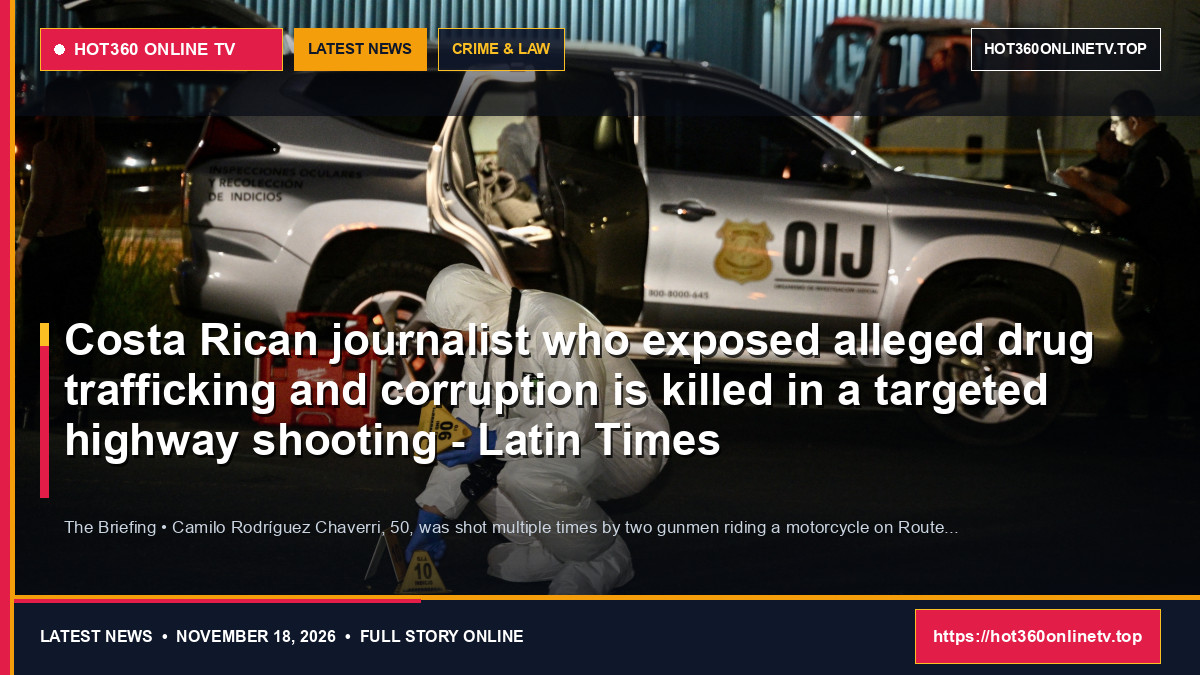
• Camilo Rodríguez Chaverri, 50, was shot multiple times by two gunmen riding a motorcycle on Route 32 in Santo Domingo de Heredia on the afternoon of November 16, 2026.
• Rodríguez had publicly disclosed that he was receiving death threats from criminal organizations and had already sent copies of his investigations to media outlets in Argentina, Uruguay, Miami, and Los Angeles to ensure they would survive his death.
• Prosecutors are pursuing whoever ordered the killing, not only those who carried it out, in what investigators believe is a contract assassination tied to the journalist's coverage of drug trafficking and official corruption.
An independent Costa Rican journalist who built his reputation by identifying alleged drug traffickers, money launderers, and corrupt officials on camera was shot dead in broad daylight on a major national highway on Monday, November 16 — a targeted killing that authorities are treating as directly connected to his reporting.
Ambushed on a Busy Highway
Camilo Rodríguez Chaverri, 50, was behind the wheel of his red pickup truck traveling along Route 32 near San Miguel de Santo Domingo de Heredia, approximately ten kilometers north of San José, when two individuals dressed in black and riding a white motorcycle pulled alongside and opened fire. The attack unfolded between 3:45 and 4:00 in the afternoon. First responders with the Costa Rican Red Cross found him inside the vehicle, dead from multiple gunshot wounds. Forensic investigators with the OIJ's crime scene unit recovered at least ten shell casings from the site — evidence of a deliberate, coordinated assault.
A Reporter Who Named Names on Camera
What set Rodríguez apart from most journalists covering organized crime was specificity. Through a relentless output of social media videos, he moved beyond vague accusations and identified individuals by name, connecting them to both domestic criminal networks and international trafficking organizations. His reporting covered money laundering operations, cartel activity, and alleged ties between organized crime and public officials — a body of work that earned him a large following and, apparently, dangerous enemies.
The Costa Rican Journalists' Association (Colper) described him as a "dissident voice" who consistently sounded the alarm about the expansion of organized crime across the country through his social media platforms. His audience grew precisely because of that willingness to say what others would not.
He Declared Publicly That His Life Was at Risk
What makes the killing particularly haunting is how openly Rodríguez had spoken about his own mortality. Long before his death, he disclosed publicly that criminal organizations had been threatening him. Attorney General Carlo Díaz later confirmed that the journalist had been informed about the official witness protection program but chose not to enroll in it.
Instead, he devised his own safeguard. He announced publicly that he had already distributed duplicates of his investigative files to news organizations in Argentina, Uruguay, Miami, and Los Angeles, as well as to a former Costa Rican official. His stated intent was unambiguous: if something happened to him, his investigations would still reach the public.
Investigators Look Past the Gunmen
The case was handed to the OIJ's Homicide Section in San José, Costa Rica's judicial investigative police agency. Prosecutors stated publicly that the inquiry would be comprehensive — aimed at identifying not only the individuals who pulled the trigger but also whoever commissioned the attack. Public Force Director Raúl Rivera confirmed that authorities were actively pursuing the two motorcycle riders believed responsible, while noting that no arrests had been made as of Monday evening.
A Presidential Condemnation, Complicated by History
President Laura Fernández publicly condemned the killing as a cowardly act and ordered law enforcement agencies to cooperate fully with investigators. The statement carried an uncomfortable backdrop: before her election, Fernández had filed a defamation lawsuit against Rodríguez over content he had published about her during the campaign, as reported by La Nación. The legal dispute did not deter the journalist from continuing to publish.
A Country That No Longer Feels Safe for Reporters
The killing did not occur in a vacuum. It has renewed concerns about the safety of journalists in Costa Rica— in a country that until recently was considered among the safest on the entire continent for press freedom. As recently as 2021, Reporters Without Borders ranked Costa Rica fifth in the world; by 2026, it had fallen to 38th, a decline reflecting mounting institutional pressures on independent journalism that long preceded Monday's attack.
The country's emergence as a primary transit corridor for South American cocaine moving toward North American and European markets has fueled cartel-linked violence at a pace that institutions are struggling to contain. For journalists willing to cover that story with the kind of specificity Rodríguez brought to it, Monday's killing confirms the dangers are no longer hypothetical.
• Costa Rica Education Crisis: Thousands March Against Historic $17.6M University Cut
• Díaz-Canel Celebrates Ortega's Cuba Ties as Nicaragua Leader Reappears After 68 Days Out of Public View
• 68 Days Gone, 25 Minutes Back: What Ortega's Reappearance Reveals About Nicaragua's Future