Story Breakdown & Key Highlights
- Mali’s transition is at risk as political parties are dissolved
- Political party bans by military authorities in Burkina Faso and Niger have met little resistance, but in Mali they ignited defiance.
Full Report
Mali’s transition is at risk as political parties are dissolved
Political party bans by military authorities in Burkina Faso and Niger have met little resistance, but in Mali they ignited defiance.
On 13 May, Mali’s military transitional authority decreed the dissolution of political parties. Although most of the country’s nearly 300 parties were not functional, this is a major setback for Mali’s prospects of remaining a multiparty democracy.
It is also a notable turning point in the transition that started five years ago, when a double military coup led by Mali’s current leader Assimi Goïta toppled the government. By closing down the democratic space, the military authorities risk worsening insecurity in the country, which already faces persistent jihadism and a recurrent rebellion in the north.
The country’s political parties are fighting back but whether this will make a difference in a region dominated by juntas remains to be seen.
The decision follows April’s national ‘consultations’ aimed at revising the Charter of Political Parties – a process that most of the political class boycotted. The consultations recommended not only that political parties be dissolved, but a revision of the country’s Transition Charter to give Goïta the presidency for a renewable five-year term beginning in 2025.
That last recommendation was not among the subjects officially addressed during the consultations. However, participants emphasised the need for Mali to align its governance framework with Niger and Burkina Faso, its allies in the Alliance of Sahel States Confederation. All three central Sahel countries are governed by military regimes, and have strengthened ties since their January withdrawal from the Economic Community of West African States.
This public defiance is the first of its kind since Mali’s military authorities took hold in August 2020
Niger’s General Abdourahamane Tchiani was sworn in as president for a renewable five-year term on 26 March, in line with recommendations made during national meetings in February. The Nigerien authorities also closed down political parties, acting on the outcomes of these meetings.
Similarly, in Burkina Faso, consultations led to Captain Ibrahim Traoré being declared president of the country for a five-year term. Political party activities were suspended soon after the September 2022 coup, a decision that remains in effect.
In an international environment where the multilateralism system is in crisis and the levers for democratic pressure are weakened, the banning of political parties has met little resistance in Burkina Faso and Niger. In Mali however, the political class is standing up to the authorities.
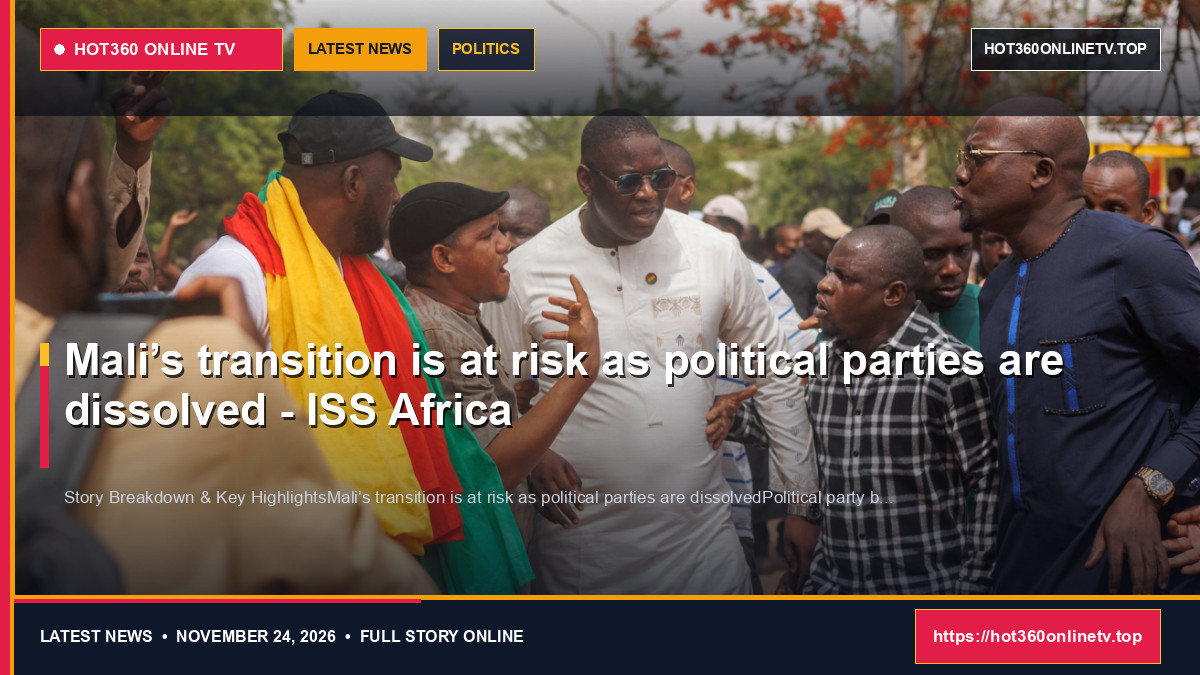
When Mali’s authorities adopted a bill on 30 April repealing laws governing political parties and the opposition, political parties held street protests against the bill. Then on 3 and 4 May, they rallied hundreds of supporters in the capital Bamako, demanding a return to constitutional order by 31 December. The gatherings were disrupted by groups claiming to support the government, and by police who cited the risk of clashes breaking out.
Political parties again called for protests on 9 May, but on 7 May the authorities suspended all their activities and those of associations ‘until further notice’ – and so the planned demonstrations were postponed.
This public defiance is the first of its kind since Mali’s military authorities took hold in August 2020. While it may not significantly shift the balance of power away from the current leadership, the political class is clearly positioning itself as a force that cannot be ignored in shaping the transition.
Repressive measures could backfire, strengthening support for the opposition parties that authorities aim to neutralise