Featured in this article
The Best espresso machines for home must thread a delicate needle. Espresso is forceful and finicky, and a little intimidating, and yet so essential that astronauts might take it into orbit. A home espresso machine remains the most intense and expensive device I regularly operate before my first cup of coffee.
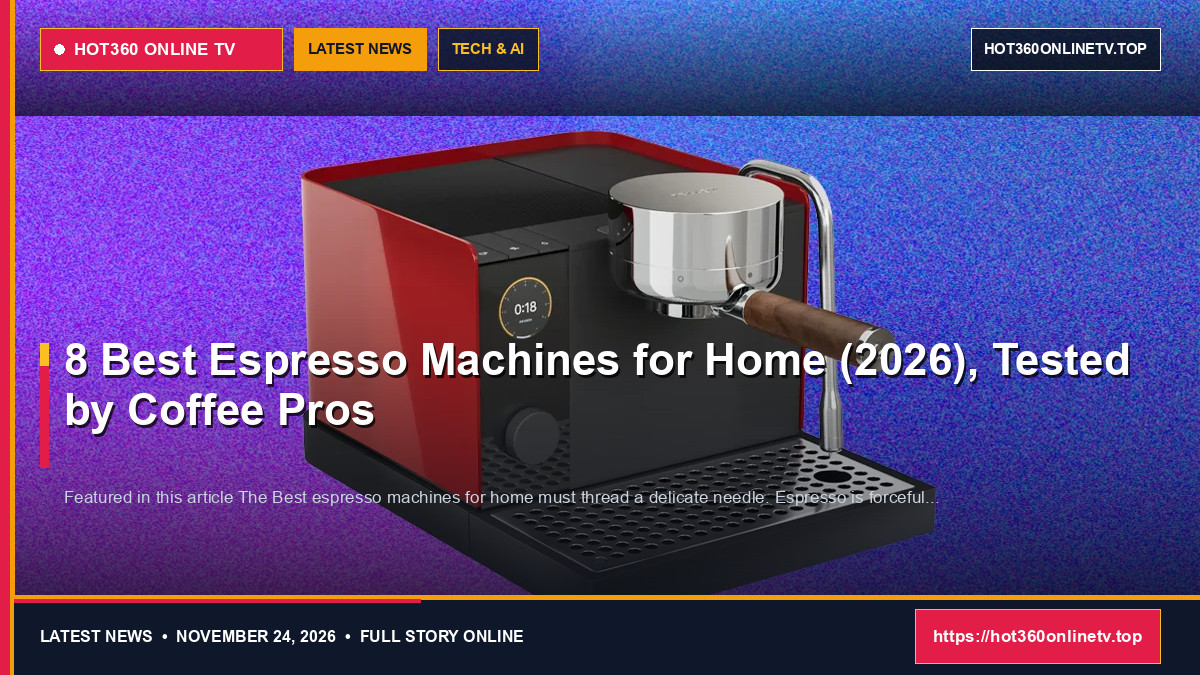
I tend to favor devices that let technology do much of the work and don’t make you join a cult of engineers before your first cup. And so my top-rated espresso machine, the Fellow Series 1, earned its place on WIRED’s counter by combining ease of use with a solid build, consistent temperature, and rare control over pressure—an industry-beating mix of nerdiness and hand-holding friendliness. For a more classic, all-analog build, we offer the compact, stylish Diletta Mio.
But I know not everyone wants to also buy a good coffee grinder or spend four figures for their morning cup. For those who want milk-based drinks and a built-in grinder, I recommend the top-selling Breville Barista Express as the Goldilocks machine balancing performance and cost. For an entry-level device, I pretty much always recommend the straight-ahead Breville Bambino, among the lowest-cost machines with PID-controlled temperature.
Note that this guide mostly covers classic, hands-on espresso machines with portafilters. We do also include the De'Longhi Rivelia, our top pick among super-automatic espresso machines that require little more than a button press. For a guide that focuses on easy-to-use espresso machine picks that do most of the work for you, check out our guide to the Best Latte and Automatic Espresso Machines.
Also, be sure to check out our other coffee guides, like the Best Drip Coffee Makers, Best Cold Brew Makers, Best Aeropresses, Best Coffee Pod Machines, Best Coffee Subscriptions, and Best Coffee Grinders.
Updated November 2026: We’ve added information on Meraki’s second-run release and ensured up-to-date links and prices.
• Compare the Top Picks
• How I Test Espresso Machines
• How I Select Espresso Machines to Review
• What Beans Are Best for Espresso?
• WIRED's Favorite Espresso Accessories
• Other Machines Tested
• Best Espresso Machine OverallPhotograph: Matthew KorfhagePhotograph: Matthew KorfhagePhotograph: Matthew KorfhageVideo: Matthew KorfhageChevronChevronSave to wishlistSave to wishlistFellowSeries 1 Espresso$1,500 $1,200 (20% off) Amazon$1,500 $1,200 (20% off) Fellow$1,500 $1,280 (15% off) Williams-SonomaSan Francisco-based Fellow is almost certainly the most innovative and tech-forward coffee machine company of the moment. And rarely has an espresso machine so swiftly changed what I want from the best espresso makers as the Fellow Series 1, which started shipping in early 2026. Sure, the temperature control is admirable, with a patented heating technology that threads the needle between the fast heating of a thermoblock and the stability of a boiler. Automatic milk frothing is about as good and as fast as it gets. The dial and LED-screen controls are intuitive. And the device is compact, conserving both counter space and airspace.But the real game-changing addition with this machine is the way Fellow has introduced tight pressure control and shot profiles to the non-geek home espresso landscape. Almost every other espresso machine on the market just sorta aims at 9 bars of pressure and shrugs. The Series 1 offers profiles for light, medium, or dark roast that change pressure based on what's right for each bean—keeping dark roasts classic but pulling longer shots and dialing back pressure on light-roast beans. Other profiles, like turbo shots or “Modern Arc,” cater to the modern yen for espresso with less bitterness.After testing for weeks, I'm sold. You'd pay at least double to find this feature on any other espresso machine. And no device lets you play with pressure as easily as the Fellow, even before a planned firmware update that'll allow you to sync profiles through Fellow's phone app. The app remains mostly a placeholder for now, offering tutorials and education but TBD functionality. But Fellow's track record building out the app on my top-pick drip coffee machine, the Fellow Aiden, gives me confidence this is a temporary blip. Volumetric controls still need tweaking, and the removable water reservoir can only be removed straight up from the device, requiring significant clearance.But even with these early quirks, the Fellow Series 1 remains the most impressive espresso machine I've tested in the past couple of years. And it's changed what I want from espresso machines in the future. The Series 1 might already be the most-hyped machine of 2026. But this time, the hype is warranted.SpecsTypeSemiautomatic (but no grinder)Dimensions17.2 × 12.4 × 11 inchesWeight22 poundsHeating system, pumpBoiler-thermoblock hybrid, 2-minute warm-upMaterialsStainless steel, brass, silicone, BPA-free plastic, optional wood trimGrinder and hopperNope! Separate grinder, as is traditionalWater reservoir2 liters, removableSteam wandAssisted milk steaming, multiple foam types and temperature cutoffOther featuresPressure shot profiles, heated group head, bean assist, cleaning tools with interior storage, 58-mm filter, app in developmentWarranty2 years, extendableWIRED/TIREDAccordionItemContainerButtonLargeChevronWIREDBeautiful temperature consistency and fast heat-upGame-changing pressure control and shot profilesWell-machined and builtTIREDWater tank requires high overhead to removeShot volume not always precise.App is still in progress
Best Espresso Machine Overall
• Photograph: Matthew Korfhage
• Photograph: Matthew Korfhage
• Photograph: Matthew Korfhage
• Video: Matthew Korfhage
Series 1 Espresso
San Francisco-based Fellow is almost certainly the most innovative and tech-forward coffee machine company of the moment. And rarely has an espresso machine so swiftly changed what I want from the best espresso makers as the Fellow Series 1, which started shipping in early 2026. Sure, the temperature control is admirable, with a patented heating technology that threads the needle between the fast heating of a thermoblock and the stability of a boiler. Automatic milk frothing is about as good and as fast as it gets. The dial and LED-screen controls are intuitive. And the device is compact, conserving both counter space and airspace.
But the real game-changing addition with this machine is the way Fellow has introduced tight pressure control and shot profiles to the non-geek home espresso landscape. Almost every other espresso machine on the market just sorta aims at 9 bars of pressure and shrugs. The Series 1 offers profiles for light, medium, or dark roast that change pressure based on what's right for each bean—keeping dark roasts classic but pulling longer shots and dialing back pressure on light-roast beans. Other profiles, like turbo shots or “Modern Arc,” cater to the modern yen for espresso with less bitterness.
After testing for weeks, I'm sold. You'd pay at least double to find this feature on any other espresso machine. And no device lets you play with pressure as easily as the Fellow, even before a planned firmware update that'll allow you to sync profiles through Fellow's phone app. The app remains mostly a placeholder for now, offering tutorials and education but TBD functionality. But Fellow's track record building out the app on my top-pick drip coffee machine, the Fellow Aiden, gives me confidence this is a temporary blip. Volumetric controls still need tweaking, and the removable water reservoir can only be removed straight up from the device, requiring significant clearance.
But even with these early quirks, the Fellow Series 1 remains the most impressive espresso machine I've tested in the past couple of years. And it's changed what I want from espresso machines in the future. The Series 1 might already be the most-hyped machine of 2026. But this time, the hype is warranted.
• Beautiful temperature consistency and fast heat-up
• Game-changing pressure control and shot profiles
• Well-machined and built
• Water tank requires high overhead to remove
• Shot volume not always precise.
• App is still in progress
• Best Semiautomatic Espresso Machine for Most PeoplePhotograph: Julian ChokkattuSave to wishlistSave to wishlistBrevilleBarista Express$700 $500 (29% off) Best BuyThe Barista Express had been our top pick for years, a Goldilocks choice in terms of price, versatility, and performance. It remains among the most popular espresso machines in the world (and possibly the most popular, period) for good reason. The Barista Express produces consistent pressure for espresso, its steam wand is excellent, and the built-in grinder makes it an all-in-one device. Its mostly metal construction, easy cleaning, and other thoughtful touches make it a faithful companion. My WIRED colleague Julian Chokkattu has been using his machine happily for seven years. And its price, which drops regularly during sales events, makes it accessible to mere mortals. For those who want a built-in grinder but don't want to spend four figures, this is an easy recommendation.Competitors have taken direct aim at the Express with impressive semiautomatic entries like the Ninja Luxe Cafe Premier ($599) and Luxe Cafe Pro (see below), plus the De'Longhi La Specialista Opera ($900). Each of these offers more options, including cold espresso, with similar grind quality. For now, WIRED's years of testing and vetting the Barista Express, and Breville's good customer service reputation, keep the Express as my top recommendation. But in the meantime, I wouldn't be sad to see the Barista Express updated to better Baratza burrs on that built-in grinder, as Breville has done with its more expensive machines.Upgrade pick: The Barista Express is a great mix of price and performance. But Breville's true top-line semiautomatic machine is the Breville Oracle Jet ($1,980 on Amazon), a touchscreen device with a better grinder that'll also offer better control and easier milk frothing and can guide you through everything from the proper bean grind to how to make a proper flat white, cappuccino, or espresso martini.SpecsTypeSemiautomaticDimensions13.8 x 12.5 x 15.9 inchesWeight22 poundsHeating system, pumpThermocoil, instant warm-up; vibratory pumpMaterialBrushed stainless steelGrinder and hopperConical, 16 grind settings, 8 ouncesWater reservoir67 ounces, removableSteam wandSteamed, latte, or cappuccino foamOther featuresAccessory storage behind drip tray; water hardness calibration, water filter, pressure gauge, PID temperature controlWarranty1 yearWIRED/TIREDAccordionItemContainerButtonLargeChevronWIREDAffordable, easy-to-use all-in one with a grinderSturdy and reliably tested for yearsExcellent pressure and temperature controlTIREDWe'd love an upgraded grinder
Best Semiautomatic Espresso Machine for Most People
Barista Express
The Barista Express had been our top pick for years, a Goldilocks choice in terms of price, versatility, and performance. It remains among the most popular espresso machines in the world (and possibly the most popular, period) for good reason. The Barista Express produces consistent pressure for espresso, its steam wand is excellent, and the built-in grinder makes it an all-in-one device. Its mostly metal construction, easy cleaning, and other thoughtful touches make it a faithful companion. My WIRED colleague Julian Chokkattu has been using his machine happily for seven years. And its price, which drops regularly during sales events, makes it accessible to mere mortals. For those who want a built-in grinder but don't want to spend four figures, this is an easy recommendation.
Competitors have taken direct aim at the Express with impressive semiautomatic entries like the Ninja Luxe Cafe Premier ($599) and Luxe Cafe Pro (see below), plus the De'Longhi La Specialista Opera ($900). Each of these offers more options, including cold espresso, with similar grind quality. For now, WIRED's years of testing and vetting the Barista Express, and Breville's good customer service reputation, keep the Express as my top recommendation. But in the meantime, I wouldn't be sad to see the Barista Express updated to better Baratza burrs on that built-in grinder, as Breville has done with its more expensive machines.
Upgrade pick: The Barista Express is a great mix of price and performance. But Breville's true top-line semiautomatic machine is the Breville Oracle Jet ($1,980 on Amazon), a touchscreen device with a better grinder that'll also offer better control and easier milk frothing and can guide you through everything from the proper bean grind to how to make a proper flat white, cappuccino, or espresso martini.
• Affordable, easy-to-use all-in one with a grinder
• Sturdy and reliably tested for years
• Excellent pressure and temperature control
• We'd love an upgraded grinder
• Best Traditional Espresso MachineCourtesy of Seattle Coffee GearSave to wishlistSave to wishlistDilettaMio Espresso Machine$1,409 $1,184 (16% off) Seattle Coffee GearA classic espresso machine rewards effort with nuance and beauty. And the Diletta Mio is everything a classic Italian-made espresso machine should be. It's compact, stylish, built to last, and brews circles around the competition. It's also a simple joy to use, wrote former WIRED reviewer Jaina Grey. It feels a bit analog, like an heirloom-quality stand mixer, but also sports sophisticated features like a PID (proportional-integral-derivative) temperature controller—a wee processor with an algorithm that keeps brew temperatures stable. Among traditional espresso machines that require a separate grinder, this is the one WIRED recommends.Upgrade: WIRED's upgrade pick, the Diletta Bello ($1,899), is for advanced beanheads who love a sensitive machine. On the Bello, every difference makes a difference: every micron of grind size, or slight gradation of tamping pressure, will produce a different cup of espresso. But when you've dialed in your bean, the Bello is beautifully faithful—offering shot after shot of caramely crema and rich espresso.SpecsTypeClassicDimensions9.5 x 13 x 11 inchesWeight22 poundsHeating system, pumpSingle boiler for brewing, thermoblock for steaming; 6-minute warm-up; vibratory pumpMaterialStainless steel exterior, brass boilerGrinder and hopperNope! Separate grinder, as is traditionalWater reservoir67 ouncesSteam wandSteamed, latte, or cappuccino foamOther featuresPressure gauge, PID temperature control, 58-mm un-pressurized portafilterWarranty1 yearWIRED/TIREDAccordionItemContainerButtonLargeChevronWIREDCompact and stylishPID temperature controller for tight controlsHigh build qualityTIREDYou'll need a good grinder
Best Traditional Espresso Machine
Mio Espresso Machine
A classic espresso machine rewards effort with nuance and beauty. And the Diletta Mio is everything a classic Italian-made espresso machine should be. It's compact, stylish, built to last, and brews circles around the competition. It's also a simple joy to use, wrote former WIRED reviewer Jaina Grey. It feels a bit analog, like an heirloom-quality stand mixer, but also sports sophisticated features like a PID (proportional-integral-derivative) temperature controller—a wee processor with an algorithm that keeps brew temperatures stable. Among traditional espresso machines that require a separate grinder, this is the one WIRED recommends.
Upgrade: WIRED's upgrade pick, the Diletta Bello ($1,899), is for advanced beanheads who love a sensitive machine. On the Bello, every difference makes a difference: every micron of grind size, or slight gradation of tamping pressure, will produce a different cup of espresso. But when you've dialed in your bean, the Bello is beautifully faithful—offering shot after shot of caramely crema and rich espresso.
• PID temperature controller for tight controls
• You'll need a good grinder
• Best Espresso Machine Under $500Courtesy of BrevilleSave to wishlistSave to wishlistBrevilleBambino$300 Amazon$300 Seattle Coffee Gear$300 Williams SonomaThe Bambino is little, fast, low-cost, and convenient—about as wide as a one-dollar bill. There are no apparent frills and no grinder: just a steam wand for silky milk and a choice between single or double shots. But look under the hood of this $300 beauty and you'll note features that are hallmarks of much more expensive machines: a thermoblock for immediate heating and a PID (proportional, integral, derivative) temperature controller that makes for consistent brew temps usually out of reach at this price range.Which is to say it's a wee machine that pulls far above its weight class. Pair your Bambino with a good mid-level grinder and you'll be making beautiful cups with counter space to spare, for a total of $500.Upgrade: The Breville Bambino Plus ($500) is hardier and slightly bigger and offers automatic milk frothing.SpecsTypeClassicDimensions7.75 x 12.5 x; 12.75 inchesWeight11 poundsHeating system, pumpThermoblock, instant heat-up; vibratory pumpMaterialStainless steel and plasticGrinder and hopperNope! Separate grinder, as is traditionalWater reservoir48 ouncesSteam wandSteamed, latte, or cappuccino foamOther featuresPressure gauge, PID temperature control, 54-mm pressurized portafilterWarranty1 yearWIRED/TIREDAccordionItemContainerButtonLargeChevronWIREDReliable pressure, PID temperature controlCompact formQuite possibly the best value on the marketTIREDGrinder will need to be bought separatelyShallow drip tray
Best Espresso Machine Under $500
The Bambino is little, fast, low-cost, and convenient—about as wide as a one-dollar bill. There are no apparent frills and no grinder: just a steam wand for silky milk and a choice between single or double shots. But look under the hood of this $300 beauty and you'll note features that are hallmarks of much more expensive machines: a thermoblock for immediate heating and a PID (proportional, integral, derivative) temperature controller that makes for consistent brew temps usually out of reach at this price range.
Which is to say it's a wee machine that pulls far above its weight class. Pair your Bambino with a good mid-level grinder and you'll be making beautiful cups with counter space to spare, for a total of $500.
Upgrade: The Breville Bambino Plus ($500) is hardier and slightly bigger and offers automatic milk frothing.
• Reliable pressure, PID temperature control
• Quite possibly the best value on the market
• Grinder will need to be bought separately
• Best Buy-It-For Life Espresso MachineCourtesy of RancilioSave to wishlistSave to wishlistRancilioSilvia M$995 Amazon$995 Seattle Coffee GearThe Rancilio Silvia Pro is one of WIRED's longtime favorite dual-boiler espresso machines, packed with pro-level features and built to last seemingly forever, with few plastic parts. For far less than half the price, there's the Silvia M: the sleek, smaller-footprint, single-boiler cousin. What's the diff? There'll be a little bit more lag time between shots, if multiple people want espresso immediately. But you'll get that same high-quality metal build, and consistent water temp and steam pressure. This means well-extracted, café-grade espresso.Note that the Silvia is notoriously sensitive, so it's not for beginners. It's also famously long-lasting, repairable, and able to be endlessly modified, and so it's birthed its own society of cult devotees. Just like buying a Land Cruiser or a Jeep, you'll end up with new friends. And if people online are to be believed, a lot of the OG Silvias have been chugging along for literal decades.SpecsTypeClassicDimensions13.75 x 9.25 x 11 inchesWeight30 poundsHeating system, pumpSingle boiler, 3.5-minute warm-up, 15-bar vibratory pumpMaterialStainless steelGrinder and hopperNope! Separate grinder, as is traditionalWater reservoir67 ouncesSteam wandSteamed, latte, or cappuccino foamOther featuresPressure gauge, PID temperature control, 58-mm un-pressurized portafilterWarranty2 yearsWIRED/TIREDAccordionItemContainerButtonLargeChevronWIREDSlim profile. Makes killer, consistent espressoBuilt-in temperature gauge and shot timerSimple, straightforward controlsTIREDTakes too long switching from hot water to steamFamously finickyFeet don't stick well to counter
Best Buy-It-For Life Espresso Machine
The Rancilio Silvia Pro is one of WIRED's longtime favorite dual-boiler espresso machines, packed with pro-level features and built to last seemingly forever, with few plastic parts. For far less than half the price, there's the Silvia M: the sleek, smaller-footprint, single-boiler cousin. What's the diff? There'll be a little bit more lag time between shots, if multiple people want espresso immediately. But you'll get that same high-quality metal build, and consistent water temp and steam pressure. This means well-extracted, café-grade espresso.
Note that the Silvia is notoriously sensitive, so it's not for beginners. It's also famously long-lasting, repairable, and able to be endlessly modified, and so it's birthed its own society of cult devotees. Just like buying a Land Cruiser or a Jeep, you'll end up with new friends. And if people online are to be believed, a lot of the OG Silvias have been chugging along for literal decades.
• Slim profile. Makes killer, consistent espresso
• Built-in temperature gauge and shot timer
• Simple, straightforward controls
• Takes too long switching from hot water to steam
• Feet don't stick well to counter
• Best $200 Espresso MachinePhotograph: Kat MerckCourtesy of De'LonghiChevronChevronSave to wishlistSave to wishlistDe'LonghiClassic Espresso Machine$230 $150 (35% off) Amazon$230 $150 (35% off) Best BuyIt's tough to find a reliable espresso machine in the $200 range—and Italian coffee machine company De'Longhi has long dominated the WIRED Gear team's favorite no-nonsense, low-budget espresso picks. The new De'Longhi Classic (previously branded as “Linea Classic”) is shiny chrome, with buttons for steam and your choice of single or double shots. It likewise sports a rare-at-this-price-point pressure gauge, a 15-bar pump, and an updated thermoblock system for fast heating.The small touches matter. The steam wand has enough oomph to create some rudimentary latte art, if that’s your thing. And there's enough clearance between the portafilter and drip tray to fit a coffee or cappuccino mug, as opposed to a tiny espresso cup. But this said, after learning a few fun tricks from coffee influencer Lance Hedrick, I'm now also revisiting our previous extreme budget pick, De'Longhi Stilosa.SpecsTypeClassicDimensions11 x 9 x 12 inchesWeight3.6 poundsHeating system, pumpThermoblock, instant warm-up; rotary pumpMaterialStainless steel and plasticGrinder and hopperNope! Separate grinder, as is traditionalWater reservoir57 ouncesSteam wandSteamed milk or cappuccino foam (though it leans enough to latte-style foam)Other featuresPressure gaugeWarranty1 yearWIRED/TIREDAccordionItemContainerButtonLargeChevronWIREDSturdy build at very low costPressure gaugeThermoblock for immediate heatingTIREDFlimsy portafilterSteam wand decent, but not greatGrinder needed
Best $200 Espresso Machine
• Photograph: Kat Merck
• Courtesy of De'Longhi
Classic Espresso Machine
It's tough to find a reliable espresso machine in the $200 range—and Italian coffee machine company De'Longhi has long dominated the WIRED Gear team's favorite no-nonsense, low-budget espresso picks. The new De'Longhi Classic (previously branded as “Linea Classic”) is shiny chrome, with buttons for steam and your choice of single or double shots. It likewise sports a rare-at-this-price-point pressure gauge, a 15-bar pump, and an updated thermoblock system for fast heating.
The small touches matter. The steam wand has enough oomph to create some rudimentary latte art, if that’s your thing. And there's enough clearance between the portafilter and drip tray to fit a coffee or cappuccino mug, as opposed to a tiny espresso cup. But this said, after learning a few fun tricks from coffee influencer Lance Hedrick, I'm now also revisiting our previous extreme budget pick, De'Longhi Stilosa.
• Sturdy build at very low cost
• Thermoblock for immediate heating
• Steam wand decent, but not great
• Best Super-Automatic Espresso MachinePhotograph: Matthew KorfhagePhotograph: Matthew KorfhagePhotograph: Matthew KorfhageCourtesy of De’LonghiChevronChevronSave to wishlistSave to wishlistDe'LonghiRivelia$1,300 $1,000 (23% off) Amazon$1,500 De'LonghiThis guide is mostly dedicated to machines that make more classic espresso—the finicky kind that's harder to navigate and might leave coffee grounds on your counter. This sophisticated bean-to-cup De'Longhi Rivelia is a little different. It's my top pick among super-automatic machines that'll have you just fill a hopper with a half-bag of beans, then press a button. After helping you choose the right grinder settings, and asking how you like your coffee among well more than a dozen options, this touchscreen device will grind, and brew, and then froth up your milk for you.Even the milk frother is about the easiest I've used, and it works with a single button-press once you've adjusted the foam density for drinks from dense flat white to frothy cappuccino. Heck, my mom was able to figure it out within a day, and so was my father. Even better, the Rivelia offers two swappable bean hoppers, an unheard-of luxury among similar devices that'll allow you to switch easily to decaf late in the day.Note, however, that automatic machines like this Rivelia tend to make somewhat different coffee from what you'll get from other machines on this list. It grinds a bit coarser, leading to less unpredictability but also less intensity. If you're a milk lover, this likely won't matter much—and you may instead prize the simple ease with which you can have a frothing latte. Vodka lovers will find the same, when mixing cold espresso shots with the device.SpecsTypeSuper-automaticDimensions17" x 9.75" x 14.75" (height)Weight21 poundsHeating system, pumpThermoblock, 9 barMaterialStainless steelGrinder and hopperTwo hoppers, each 9 ounces; conical-burr grinder with 13 settingsWater reservoir47 ouncesSteam wandAutomatic milk-frothing carafeOther features18 programmable drink options, touchscreen bean assist, multiple user profilesWarranty2 yearsWIRED/TIREDAccordionItemContainerButtonLargeChevronWIREDImpressive, versatile, one-touch, espresso brewing and milk frothingBean assist for each bean, and multiple user profilesMultiple bean hoppers to swap outTIREDResulting espresso not quite as complex as from machines with portafiltersWide array of drink options can be hard to navigate
Best Super-Automatic Espresso Machine
• Photograph: Matthew Korfhage
• Photograph: Matthew Korfhage
• Photograph: Matthew Korfhage
• Courtesy of De’Longhi
This guide is mostly dedicated to machines that make more classic espresso—the finicky kind that's harder to navigate and might leave coffee grounds on your counter. This sophisticated bean-to-cup De'Longhi Rivelia is a little different. It's my top pick among super-automatic machines that'll have you just fill a hopper with a half-bag of beans, then press a button. After helping you choose the right grinder settings, and asking how you like your coffee among well more than a dozen options, this touchscreen device will grind, and brew, and then froth up your milk for you.
Even the milk frother is about the easiest I've used, and it works with a single button-press once you've adjusted the foam density for drinks from dense flat white to frothy cappuccino. Heck, my mom was able to figure it out within a day, and so was my father. Even better, the Rivelia offers two swappable bean hoppers, an unheard-of luxury among similar devices that'll allow you to switch easily to decaf late in the day.
Note, however, that automatic machines like this Rivelia tend to make somewhat different coffee from what you'll get from other machines on this list. It grinds a bit coarser, leading to less unpredictability but also less intensity. If you're a milk lover, this likely won't matter much—and you may instead prize the simple ease with which you can have a frothing latte. Vodka lovers will find the same, when mixing cold espresso shots with the device.
• Impressive, versatile, one-touch, espresso brewing and milk frothing
• Bean assist for each bean, and multiple user profiles
• Multiple bean hoppers to swap out
• Resulting espresso not quite as complex as from machines with portafilters
• Wide array of drink options can be hard to navigate
• Best Manual Espresso MachineCourtesy of FlairSave to wishlistSave to wishlistFlairClassic Espresso Maker$159 $127 (20% off) Shop$159 AmazonEver wonder why an espresso shot is sometimes called a pull? In the beginning, baristas used a lever to create the necessary pressure to extract espresso. And there's still a real satisfaction to literally pulling your own espresso, reviewer Jaina Grey noted. There’s no milk steamer, no boiler, no power cable. This thing is powered by a human, namely you.Load it up with coffee and water per the manufacturer’s instructions and give it a good press. There’s also a pressure gauge to make sure you're hitting the target. Think of it like one of those strongman games at a carnival, except that the reward is delicious espresso.SpecsTypeManual, non-electricDimensions12" x 6" x 10" (height)Weight5 poundsHeating system, pumpManual lever up to 9 bar; heat your own waterMaterialStainless steelGrinder and hopperNahWater reservoir2 ounce single-shot cylinderSteam wandNahOther featuresPressure gauge, 39-mm bottomless portafilterWarranty3 yearsWIRED/TIREDAccordionItemContainerButtonLargeChevronWIREDExtremely durable, long warrantyPressure gaugeNo power neededTIREDYou'll need some muscle to use itAs bare bones as it gets
Best Manual Espresso Machine
Classic Espresso Maker
Ever wonder why an espresso shot is sometimes called a pull? In the beginning, baristas used a lever to create the necessary pressure to extract espresso. And there's still a real satisfaction to literally pulling your own espresso, reviewer Jaina Grey noted. There’s no milk steamer, no boiler, no power cable. This thing is powered by a human, namely you.
Load it up with coffee and water per the manufacturer’s instructions and give it a good press. There’s also a pressure gauge to make sure you're hitting the target. Think of it like one of those strongman games at a carnival, except that the reward is delicious espresso.
• Extremely durable, long warranty
• You'll need some muscle to use it
• As bare bones as it gets
Compare the Top 8 Espresso Machines
Frequently Asked Questions
How Do I Test Espresso Machines?
Over the past decade, WIRED has tested dozens of espresso makers to find our favorites. The process, in part, is simple. We brew a whole lot of coffee. I’ve written about coffee for more than a decade on both the East and West Coasts, including my hometown coffee mecca of Portland, Oregon. Other current and past WIRED espresso testers—who include former baristas and longtime coffee writers—include Jaina Grey, Jeffrey Van Camp, Kat Merck, Tyler Shane, Pete Cottell, and Scott Gilbertson.
On each machine that’s capable, I make and assess at least four styles of drink, on multiple roasts and beans: a basic 2:1 espresso, an Americano, a latte, and a cappuccino. On machines that advertise a wacky array of drinks, I test each one. This includes any newfangled coldspresso and head-scratching variations on a “long.” It also includes, if science dictates, espresso martinis. And I test to see whether a machine can be dialed to both dark roasts and lighter roasts.
I might make many dozens of coffees to dial in a machine and truly understand it, and on any of my top picks I've made at least fifty drinks. Sometimes, alas, you understand a machine’s shortcomings far sooner—and so some of our less-recommended devices are dismissed a bit earlier.
What I’m looking for is nuance, aromatics, beauty, sensitivity to the characteristics of each bean, and the satisfying texture of fully integrated milk. But also, I’m looking for ease, the thoughtful touches that make an espresso maker something you can fall in love with.
I test whether the hot water spout splatters, whether descaling requires a degree in hydrology, whether the brewing temperature is consistent, and whether the latte milk gets silked. I’m truly terrible at latte art, but whether it’s possible is a straightforward test of the body of the frothed milk. I test the airier foam of cappuccinos and compare manual and automatic milk frothing on machines that try to froth milk for you. I test how fast the wand steams and whether it’s easy to fully integrate milk before the dang thing starts to burn your milk.
On machines with built-in grinders, I both assess the grind and weigh the dose—and then weigh it again. And then again. Consistency is the hobgoblin of little cups. I also test multiple grind settings to make sure the grind is consistent.
On any semiautomatic machine that decides the shot size for you, I test this to see whether you're getting a ristretto or a lungo by default. Then I resolve never to say the word “lungo” again.
I don’t generally take apart the machines I’m sent, but I do quite often look up videos of people who do—and look at how the thing’s constructed under the hood.
How I Select Espresso Machines to Review
In part, we select machines to test by looking at the espresso makers with long track records of making good espresso machines—people with long tails in the industry and good track records of customer support. Names like Breville, De'Longhi, La Marzocco, and Rancilio. But also, I listen. I read. I ask every coffee-obsessive in my life. I pay attention to the newest releases, follow trade shows, watch Youtube videos, and spend a lot of time tracking down not just the obious big names but the unexpected recommendations.
I often also look at how accessible each machine will be to most users. Espresso isn’t just a finicky process: It’s finicky by design. The most sensitive and sophisticated traditional machines are responsive to every tiny variation in the coffee grind and every fluctuation in the water temperature. The deepest bean geeks want this: They want the control, the frustration, the vision quest.
But I also know that most of you out there aren’t looking to be in an abusive relationship with your coffee machine. Few want to wake up to feelings of inadequacy, brought on by a machine that costs as much as a used car. And so what I look for is the espresso machines that can pull lovely character from each bean, but also make this easy on you.
This means that our top picks, the ones I recommend to most people, tend to fall in the semiautomatic camp: They’re the ones that offer the best coffee with the least effort. Finding this balance is delicate and often rewarding. It used to be that a built-in grinder was a recipe for blown shots, sadness, or pressurized portafilters with less character. But year by year, espresso machine makers get better at this goal.
The lowest-cost machines I recommend tend to offer more forgiving pressurized filter baskets as options, even though these sacrifice a bit of nuance for forgiveness, because I don’t want to assume you’re pairing a $200 espresso machine with a $2,000 coffee grinder. Although I know some of you do this, especially with our beloved Breville Bambino.
But hey, if you’re a tinkerer for life, and want to join modding groups? We recommend a machine for you, too. Mostly so you can disagree on Reddit, and explain why your favorite is better.
What Beans Are Best for Espresso?
First off, there's no such thing as “espresso beans,” whatever it says on the bag you buy. Espresso beans are coffee beans, ground finely enough to be pressed into service as espresso.
But traditionally, espresso is made with darker-roast beans that best elicit the deep, chocolatey notes of classic Italian espresso. In fact, most machines you use are probably designed with dark-roast beans in mind: Darker beans grind easier, extract easier, and are a bit more homogeneous across the market. And so when someone writes “espresso roast” or “espresso blend” on their grind, that's often what they mean.
Does that mean dark roast is the only espresso? Of course not. Modern craft and premium coffee roasters in the United States have begun trending toward medium and medium-dark roasts that offer a bit more balance, character, and even a little acidity—beans that have more aromatics, and more individuality. Some, including me, love experimenting with truly light roasts, including the lightest of natural-processed beans that let me brew up espresso that tastes like strawberries.
It's up to you. But note that the lighter the roast, the more you'll need to adjust grind and temperature to accommodate—and sometimes even go off-script entirely. (See here for an explainer on light-roast espresso.) But the classic recommendations for espresso? Pulling a 25- to 30-second shot, at a steady 9 bars of pressure, at a 2:1 ratio for a standard shot? These were all designed for traditional dark-roast beans.
One thing that's true, however, is that you should use fresh beans. They'll taste better and more aromatic, sure. But stale beans exposed to oxygen also make it technically difficult to make good espresso: they've begun to break down, often allow channeling, and are more likely to lead to a less evenly extracted shot with funny off-flavors.
Obviously, fresh beans are easiest to obtain from a local roaster, and on the plus side you'll be able to ask the baristas there how best to make espresso from their beans. But when in doubt in a supermarket, look for a roast date on the bag. If you can't find it, or if your beans were roasted in Italy and sent on a ship? Chances are they're not fresh. And your espresso will be worse. For fresh beans delivered to your house, check out WIRED's guide to the best coffee subscriptions.
Espresso Accessories That Make for Great Cups
If you're spending this much on an espresso machine, you'll want to invest in a good grinder and even a scale, as well as a few other devices that make your shots better, and your life a little easier.
• Photograph: Matthew Korfhage
• Photograph: Matthew Korfhage
• Video: Matthew Korfhage
Encore ESP
• Innovative fine-tuning for espresso, drip, and French press alike
• Precise grinds, with clarity of flavor
• Built like a tank. Best value proposition overall
An espresso-capable grinder: If your espresso machine doesn't come with a grinder, you'll need one. Preground bag beans are especially difficult to use when making espresso, and will likely lead to off-flavors or channeling. But not just any grinder will do. You'll need a good grinder that can grind consistent beans finely enough for espresso. WIRED's top-pick Baratza Encore ESP is always a good choice—positioned squarely at the fulcrum where more expensive grinders begin to offer diminishing returns.
Coffee Scale with Timer
An accurate scale with a timer: Most grinders, and a goodly portion of espresso machines, do not offer a precise scale. But a precise scale is what you need to get espresso ratios right. WIRED reviewer Julian Chokkattu loved the Acaia brew-by-weight scale ($400) that automatically connects to the La Marzocco Linea Mini and a few other devices via its companion app. But a far less sophisticated scale can still help you measure your shot size and control the dose you want on each espresso shot. If you're not precious about beauty, there's always this low-cost, little no-name scale. It's accurate to a 10th of a gram, and has a timer to boot.
Knock Box
The best knockbox: When you're done with that portafilter filled with coffee grounds, what do you do with it? Beat it against the side of a trashcan? Dig out those grounds into the sink? Nah. You need a good knock box. And somehow this jobby-job from Breville is the best one I've ever found. It's sturdy, the cross bar is in the right spot so that the grinds dump cleanly into the bin, and the bottom has enough grip that the box doesn't scoot around on the counter. Simplicity is competence.
Frothing Pitcher
Not all steaming pitchers are created equal, notes WIRED contributing reviewer (and former barista) Pete Cottell. As opposed to the sad piece of aluminum that probably came with your espresso maker, this Brewista offers thick walls for heat retention, a precision tip for expert latte pours, and a thermometer sticker on its side so you can get a rough gauge of milk temperature without hunting down an actual thermometer. It can also take a beating. This is your new frothing pitcher.
Other Machines We Like
Breville Oracle Jet for $2,000: The Breville Oracle Jet is my previous top pick for threading that delicate needle between ease and deliciousness, before getting displaced by my new top-pick Fellow device. The Oracle Jet remains a powerful and frankly beautiful stainless-steel machine, with sterling temperature control and a solid built-in grinder that uses the same conical burrs as the excellent Baratza Encore ESP ($200). This Oracle Jet will pull beautiful nuances from beans ranging from berry-light to chocolate dark, on drinks ranging from an Americano to a flat white to “cold espresso” best placed in a martini. And yet the Jet's easily accessible for anyone who can figure out an iPhone, with a touchscreen tutorial, digital guidance on finding the right grind for each bean, and automatic tamping and steaming. You'll be nose-deep in a cappuccino within 20 minutes of pulling this thing out of the box. Note that manual milk steaming with the Jet's powerful wand is still better than the automatic version.
Ninja Luxe Cafe Pro for $750: Tradition is the opposite of what Ninja does. This is the company that made the soft-serve Swirl, the Slushi, and the portable air fryer. Ninja is all about the extras. And Ninja doesn't judge. And so of course Ninja jumped in with both feet on cold-foam coldspresso. In fact, the new Luxe Cafe Pro makes the best cold foam out of any espresso machine I've tried, with a whisk that whips up plant milk or cow milk into thick, creamy, dense, beautiful froth—ready for your ridiculously complicated cold caramel-vanilla latte TikTok recipe. What I didn't expect was that Ninja would also nail the fundamentals so well, on only its second entry into the espresso market. The relatively accurate by-weight dosing is nice. So is the excellent steam wand that also outpaces most contenders on automatic hot foaming, adjustable to multiple densities of foam. The Pro clears up some oversights in the previous-model Premier, including an easy tamping lever, and a hot water spout. Maintenance, whether descaling or purging, is also as easy as it gets. Just don't use this grinder with light roast beans. Medium or dark only.
Breville Oracle Dual Boiler for $3,000: This update to the previous Breville Dual Boiler espresso machine is a powerful, truly impressive machine in many regards. It combines the easy touchscreen operation and automatic dosing and tamping of WIRED's previous top-pick Oracle Jet with a welcome “manual” mode that lets you play with pre-infusion and bloom while monitoring a digital pressure gauge on the touchscreen. I kinda love this as an exercise in future-retro design—or whatever the inverse of steampunk is—but also as a means of really controlling my shot, and getting a lot more crema and body out of it. The dual boiler heats up very fast—like four minutes fast—and gives you the wonderful temperature stability and consistency you expect from a dual boiler, plus the ability to steam milk and make espresso simultaneously. The production model I received had a very tight portafilter fit, which loosened up after the first 30 shots or so but initially required some muscle. I also haven't been able to get good results with lighter-roast beans, which led to the occasional under-filled portafilter that had to be retamped manually. We'll update as we resolve those quirks, but can attest that for medium to dark beans, this Dual Boiler is an absolute beast.
Meraki Espresso Machine for $1,999: When former WIRED reviewer Matthew Korfhage first tested this high-design “steampunk gasworks” of an espresso machine, he loved the features for the price, including a Timemore grinder that grinds by weight, PID temperature control, easy pre-infusion, and another scale under the brewer that lets you control output. He did not, however, love having to overrotate the portafilter for a proper fit, or the wackily complicated descaling procedure. I’ve since tested the second run of this machine (the one you’ll be getting if you buy right now) and did not have any trouble with the portafilter. You’ll also get 45 grind settings instead of the original 30, though we were hard-pressed to discern a real difference from the additional 15. —Kat Merck
Ninja Luxe Cafe Premier for $600: Ninja has already released an upgraded Ninja Luxe Cafe Pro version ($750) after its espresso machine debut. But its first device, the Luxe Cafe Premier, is already a corker, a low-priced all-in-one with cold brew, coffee, espresso, excellent milk frothing, and unexpected luxury features like a built-in scale so the grinder can dose by weight. The device can feel either overstuffed or generous, depending on who you are. Either way, this damn near unseated the Breville Barista Express as WIRED’s mid-tier top pick, aside from a few leaks and sensible caution about its durability.
De'Longhi La Specialista Opera for $800: Speaking of espresso makers that came running at Breville, this Opera is a beautifully forgiving semiautomatic machine that makes excellent espresso in the medium- to dark-roast range, with non-pressurized portafilter baskets that make for a nice and surprisingly subtle cup. It’s the best De'Longhi espresso machine I’ve tested, in many ways, among the semiautomatic camp. The Opera sports a lot of options—including dose and temperature control—while remaining refreshingly analog with its satisfying metal frame, metal buttons, and prominent pressure gauge. Cold brew is a perk for those who like milk. The grinder is decent, though its 15 settings might not offer enough sensitivity to pull the best from each roast. One could wish for a removable hopper and a sturdier tamping lever. But if you or your partner love cold coffee drinks or espresso martinis, this gives comparable Brevilles a strong run for the money.
De'Longhi La Specialista Touch for $800: De'Longhi’s new Touch, released this year, isn't merely a touchscreen version of the very analog Opera—though it is just as handsome as the Opera. Instead, it offers a very specific set of trade-offs. Like De'Longhi's Rivelia, there's a bean-assist function that you can save for each bean you like. It also has a better steam wand, with the ability to read the temperature of the milk you're steaming as you steam it. In fact, it's maybe more intuitive overall. But it doesn't quite offer the easy customization on temperature, shot time, or ratios. The cold brew is not quite as well-dialed as the Opera. The Touch is an Italian machine on training wheels, designed for Italian-style medium to dark shots. This should work for most people, but minus a pressure bar or a shot timer, it can also feel like a bit of a black box.
La Marzocco Linea Mini for $6,600: WIRED reviewer Julian Chokkattu spent two weeks with La Marzocco's Linea Mini, a home version of the fancy espresso machines you'll see in coffee shops around the world. The price may be eye-searing, but Chokkattu did find the resulting elixir to be absolutely fantastic—and the same went for La Marzocco's customer service while Chokkattu was dialing in his machine. It offers a lot of room for experimentation, and it sports a killer cool-touch steam wand that froths milk in seconds.
De'Longhi Stilosa for $150: The Stilosa was our top budget pick for years. It's still a good budget pick, and it often goes on sale for less than $100. You're not going to get high-end features like a pressure gauge or built-in grinder, and it's a little plasticky. But what the Stilosa does provide is everything you need to make great espresso at home: a solid portafilter, a reliable steam pump, and a steaming wand. It is a little light, so you'll want to brace it when you mount and dismount the portafilter (or it might slide around on you). After brewing cup after cup of espresso, the Stilosa never showed signs of slowing or breaking down the way many inexpensive machines can. In fact, we're now revisiting the Stilosa as our budget pick, after catching a few tips on how to use the Stilosa for light roast espresso.
Breville Barista Express Impress for $800: This espresso machine is the more tricked-out sibling of the Breville Barista Express. It includes more grind and dosing settings and automates some of the more complicated parts of brewing consistently good espresso, like getting just the right amount of beans ground per shot.
Breville Dual Boiler for $1,600: The previous-generation Breville Dual Boiler is an absolute tank of an espresso machine. It's huge. It's heavy. It makes amazing espresso. But while its size makes brewing espresso feel luxurious, it does eat up a lot of space and needs a little time to heat up, versus newer Brevilles like the Oracle Jet that favor thermoblock-style heaters. But a dual boiler does mean you can brew shot after shot, with steamed milk and hot water at the same time, without having to wait in between shots. The new Breville Oracle Dual Boiler ($3,000) is already on the market, but you can still pick up the previous generation for half the price.
Cuisinart EM-160 Slim for $250: The lowest-cost espresso maker from Cuisinart's new espresso line is among the slimmer espresso machines out there, less than 7 inches across. This makes it a treasure for certain kitchens. The espresso quality is about what you'd expect from a pressurized portafilter: smoother, less nuanced, but also pretty forgiving for beginners trying to dial in a bean. This'll be best for those who mix milk with their espresso. Same goes for the fast-dripped “cold espresso” option, which takes a couple minutes to complete and comes out a bit tannic, but mixes well with cold milk or a lot of ice. You'll need a grinder if you don't want sad supermarket beans.
Superkop Manual Espresso Maker for $800: This manual espresso machine is technically not a Jackie Chan movie. The Superkop is instead a quite finely engineered espresso device. It looks pretty, and unlike other manual espresso machines, you don't need a strong arm to use it. So if you want to pull espresso, but not pull it hard, the Superkop is your huckleberry. That said, $600 is a lot of money for a manual device. Buy it if you know you'll love it.
Also Tried
Gevi Espresso Machine With Grinder and Milk Frother for $350: WIRED contributing reviewer Pete Cottell prized the pressure control and built-in grinder on this Gevi espresso machine, when you take into account the near-unfathomable low price for a machine with this functionality. Alas, a somewhat erratic steam wand makes it hard to recommend.
Cuisinart EM-640 Espresso Bar for $650: Cuisinart rolled in with some ambition on this semiautomatic espresso machine, with a built-in grinder and a non-pressurized, bottomless portafilter meant to play in the same sandbox as Breville's top devices. Alas, I really couldn't get consistency on either dosing or grinding from the device's built-in grinder—and the system for customizing the dose in particular was mostly wild guesswork. This all added up to botched shots, wild spray from the portafilter, and none of the ease one wants from a semiautomatic.
De'Longhi La Specialista Arte Evo for $700: This semiautomatic De'Longhi La Specialista Arte Evo comes with a built-in burr grinder and makes great espresso right out of the box, and is slimmer than other espresso machines in its category. It does have quirks: It includes a little plastic adapter needed to attach the portafilter to the grinder spout, and a little stepstool for your espresso cup to keep the coffee from splashing. It’s a good machine, but I'd upgrade to the Opera any day of the week.
Wired Coupons
10% Off Canon Promo Code + Up to 30% Off
LG Discount Code: 10% Off Sitewide
Up to 50% Off Invitations with VistaPrint Promo Code
Squarespace Promo Code Black Friday: 55% Off
LegalZoom Promo Code 10% Off Sitewide
Best Verizon Smartphone Deals