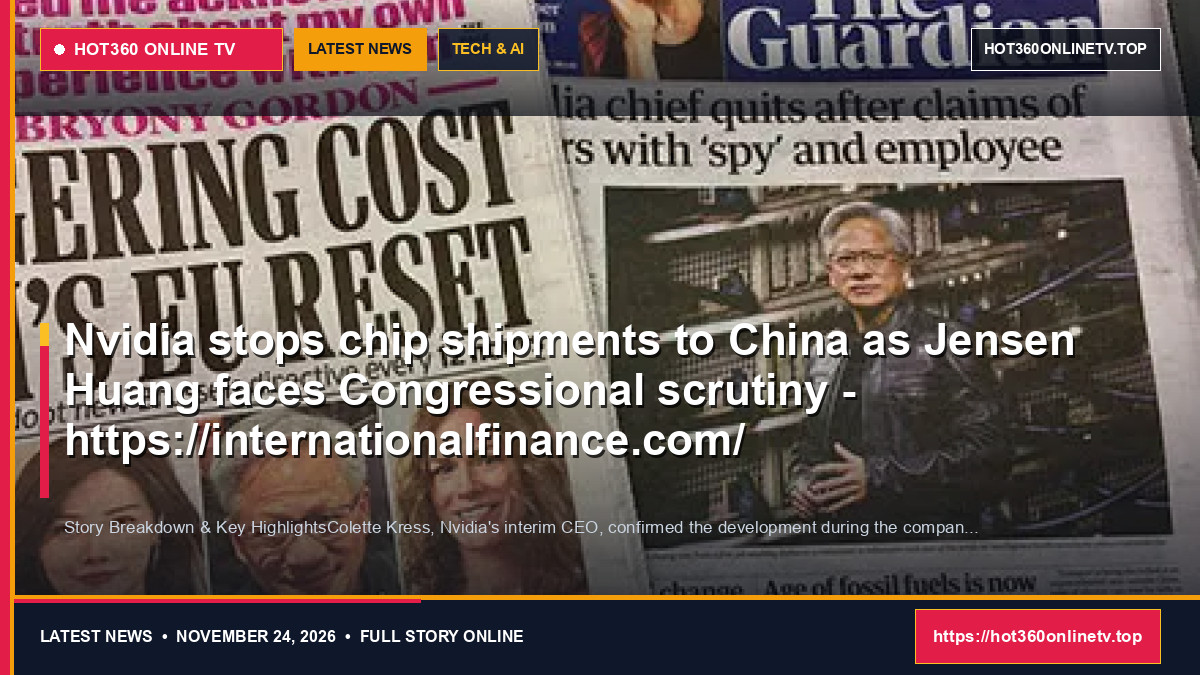
Story Breakdown & Key Highlights
- Colette Kress, Nvidia's interim CEO, confirmed the development during the company's third-quarter earnings call on Tuesday
- AI chipmaking giant Nvidia has stopped shipping its powerful H200 artificial intelligence (AI) processors to China, raising fresh questions about the future of a special...
Full Report
Colette Kress, Nvidia's interim CEO, confirmed the development during the company's third-quarter earnings call on Tuesday
AI chipmaking giant Nvidia has stopped shipping its powerful H200 artificial intelligence (AI) processors to China, raising fresh questions about the future of a special semiconductor export arrangement negotiated between Washington and Beijing.
The decision comes amid tightening US restrictions on advanced chip exports, China’s efforts to reduce its dependence on American technology, and growing scrutiny of Nvidia’s business dealings with Chinese companies, particularly as co-founder Jensen Huang faces espionage allegations that led to his resignation as CEO.
Colette Kress, Nvidia’s interim chief executive officer (CEO), confirmed the development during the company’s third-quarter earnings call on Tuesday.
Kress, who took over following Jensen Huang’s resignation last week, said Nvidia had generated USD 2.4 billion from licensed Hopper-generation data centre products sold to China during the quarter ended October 25.
However, she indicated that the company was no longer making shipments under the existing licensing arrangement and had not included further China sales in its financial guidance.
“Our guidance does not have any licenced Hopper data centre products included, and we are no longer shipping licenced Hopper data centre products to China,” Kress said.
She did not explain the reasons behind the suspension or whether the decision represented a permanent halt to shipments.
The Hopper product family includes the H200, one of Nvidia’s most powerful processors for training and running advanced AI models.
Its availability in China has become a contentious issue as the US government, irrespective of the party line, attempts to restrict Beijing’s access to advanced semiconductor technology.
The latest move raises questions about a special licensing deal that arose from diplomatic talks between US President Donald Trump and Chinese President Xi Jinping.
Washington imposed export controls on advanced AI processors in 2022 and later tightened restrictions on China’s access to Nvidia’s products.But following a summit with Xi in 2025, Trump said the US would permit sales of H200s to approved Chinese customers.
In January, the US government eased its licensing policy, allowing applications to export H200 processors to China to be reviewed individually, subject to security conditions.
The arrangement followed months of lobbying by Huang, who had argued that maintaining access to the Chinese market was important for American semiconductor companies.
The deal also carried financial conditions. Taiwan Semiconductor Manufacturing Company (TSMC), the world’s largest contract chipmaker, manufactured H200 processors for Nvidia, which were subject to a 25% tariff on eligible chips imported into the US before being shipped to China.